The Perseid Meteor shower happens every year. Shooting stars streak across the sky and fizzle out for most of August. However, at its peak, you can see up to 100 meteors an hour burn through our atmosphere. The 2026 peak occurred the night of August 12th into the early morning of August 13th. This year was special because the peak coincided with a new moon, which won’t happen again for another 26 years. A new moon allows optimal viewing, as there’s no moonlight to drown out the stars’ shine.
I have fond memories of sitting on my back porch as a kid in upstate New York watching the Perseids with my brother and parents. I wanted to do it again this time with my husband, who’s never seen stars like we were about to see. He grew up in the city in Brazil and never had much inkling to look up at the night sky.
I picked Craters of the Moon because it is hardly visited (only about 100 people each year apply for the backpacking permit), it’s an easy backpack for my husband who has never backpacked before, it’s only about an hour and a half from where we live, and lastly and most importantly, it’s an International Dark Sky Park. An International Dark Sky Park is a place where the skies are protected from light pollution and are therefore extraordinarily dark.
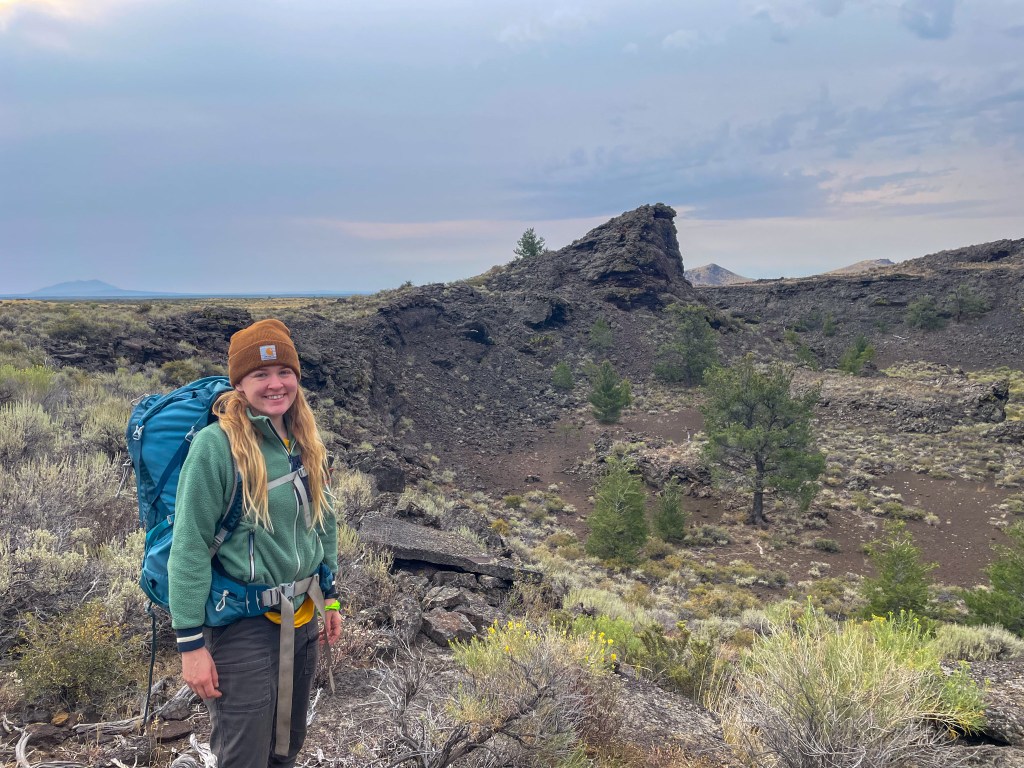
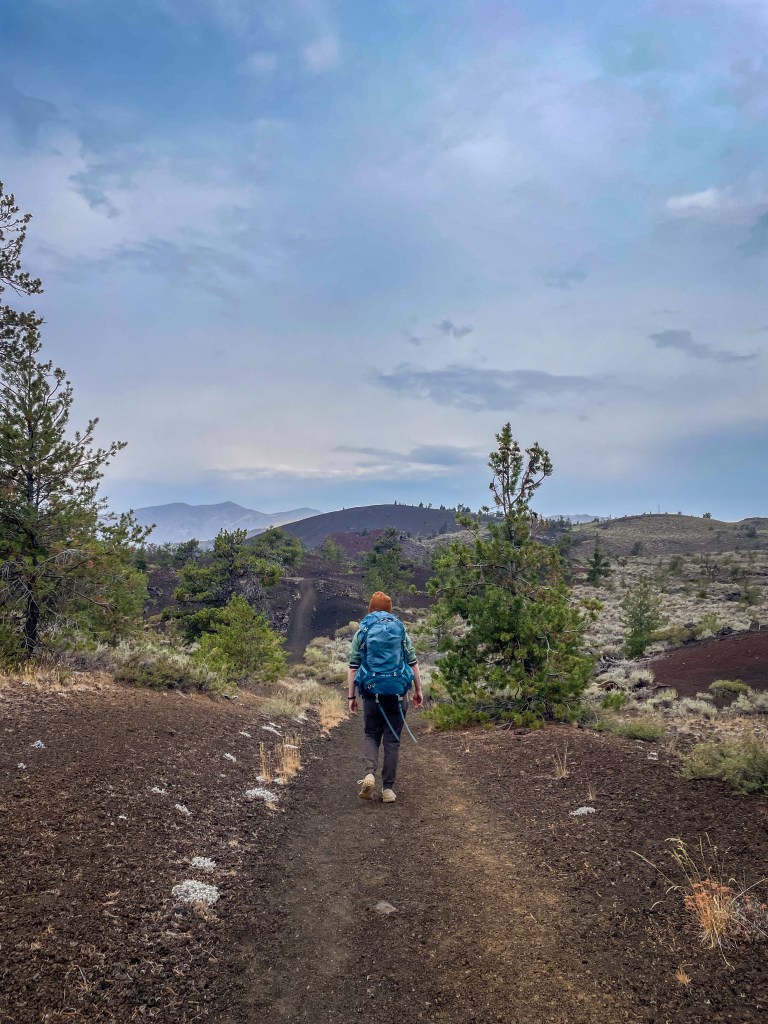
So, we headed out on the afternoon of August 12th to Craters of the Moon National Monument. After a quick stop at the Robert Limbert Visitor Center to get our free backpacking permits, we were on our way. We planned to camp in Echo Crater, about 3.5 miles from the trailhead. My backpack weighed 25 lbs, and my husband’s weighed a cool 17.
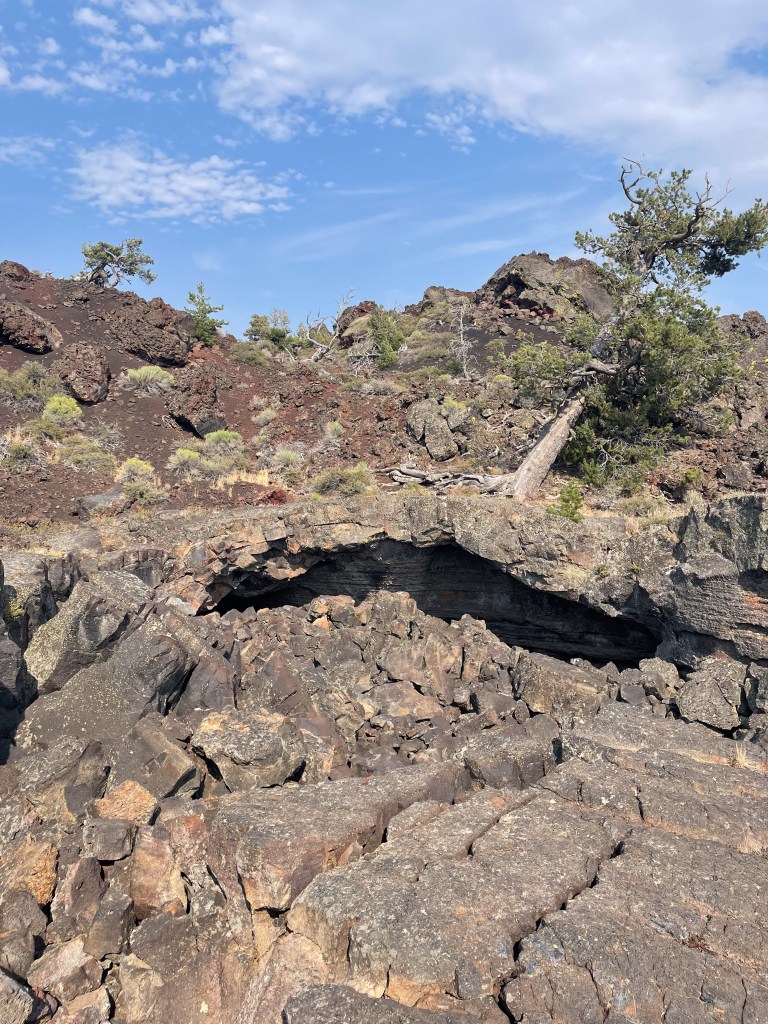
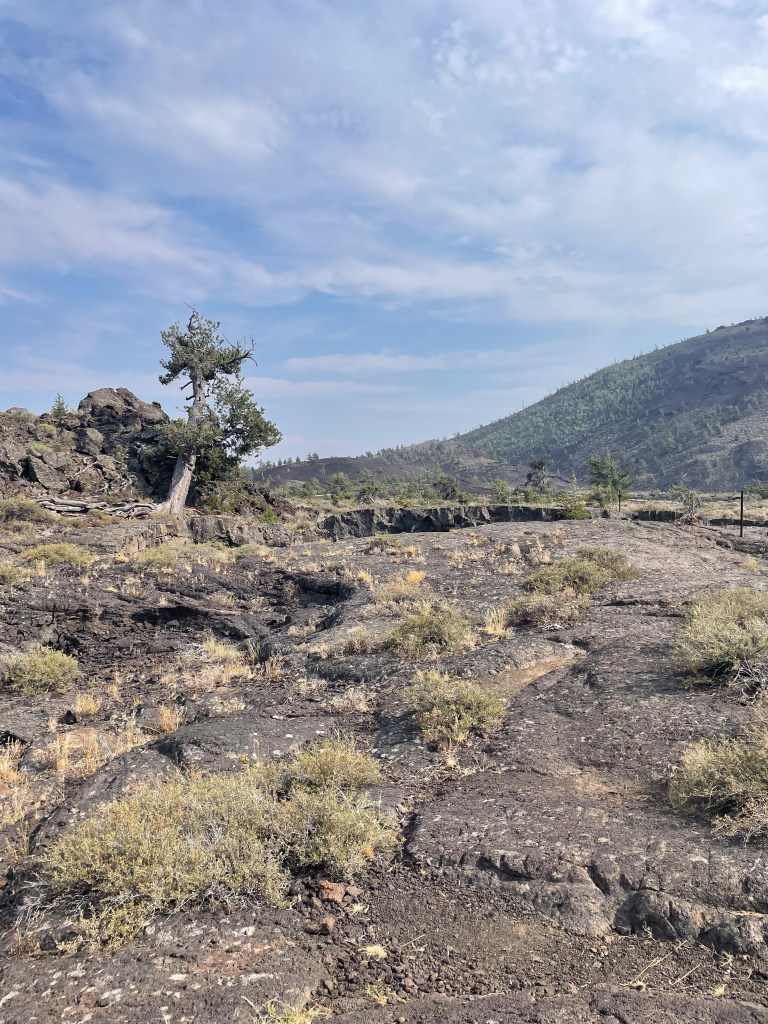
The trail is mostly flat, with large basalt rocks from old lava flows and fine black volcanic sand. According to the National Park Service, Craters of the Moon formed sometime between 15,000 and 2,000 years ago through a series of volcanic eruptions out of the Great Rift. The area is still considered active and is fueled by the same geothermal hotspot as Yellowstone. Volcanic activity here, however, tends to ooze rather than explode.
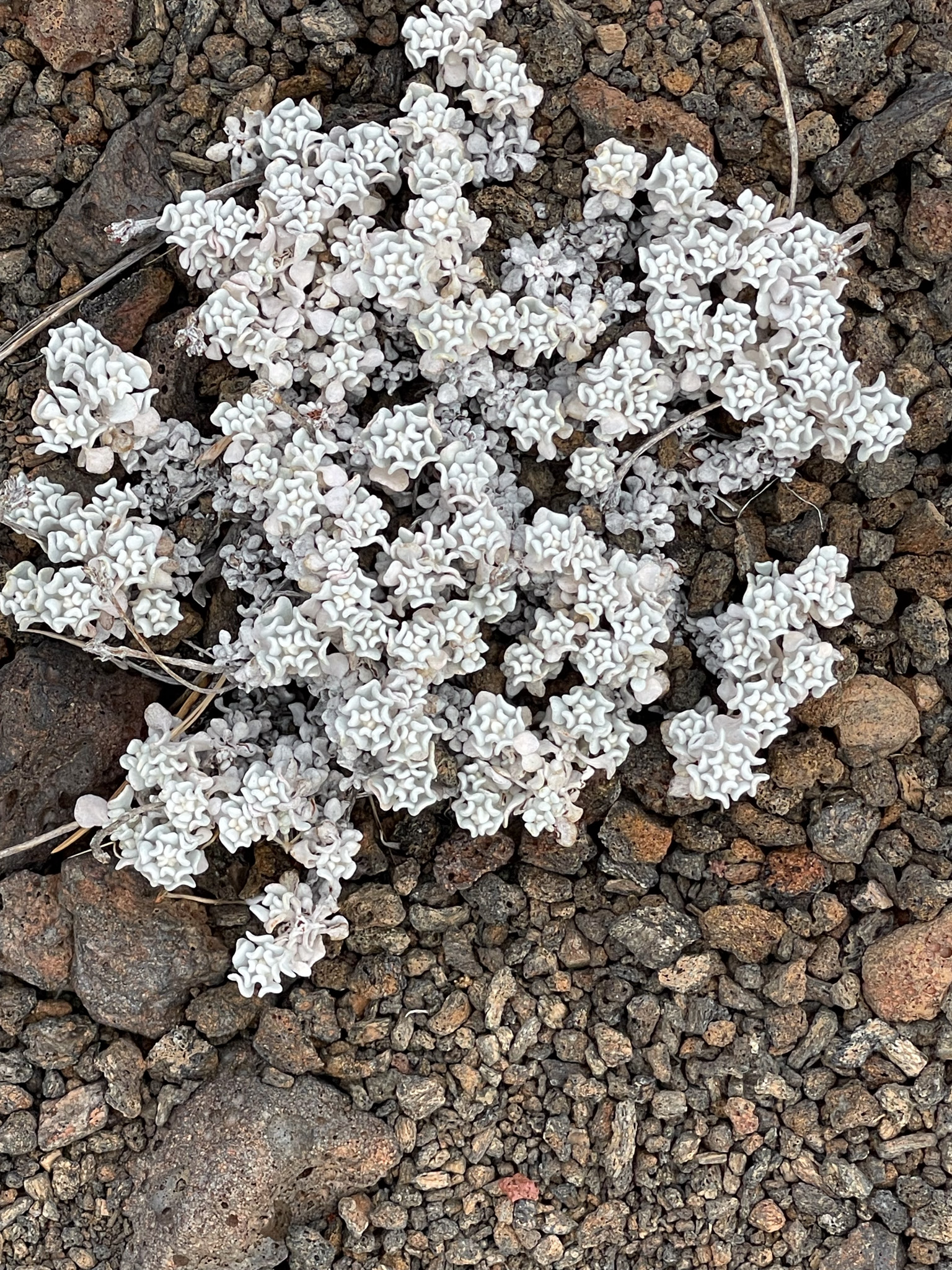
Even so, life finds a way as plants crawl out of the inhospitable environment and spread their leaves toward the sky above, between the fissures of black and brown rock. One of the most common plants is Dwarf Buckwheat, a low-growing shrub that creates white flowers that offer a striking contrast to the black sands it grows in.
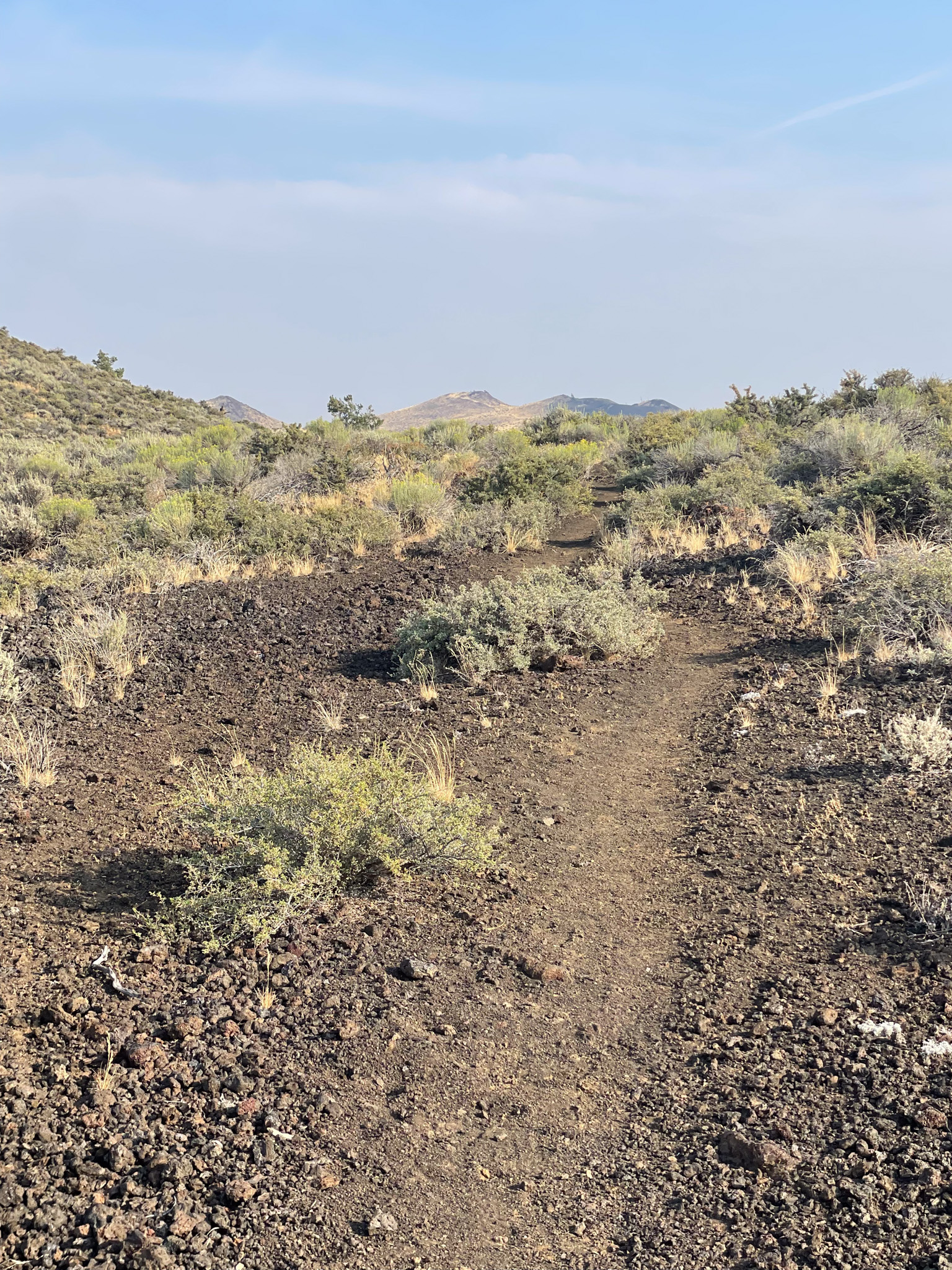
It was sunny and hot that day with no shade. The only trees that exist here are a few limber pines and a juniper here and there. Luckily, a nice breeze wafted the lovely smells of the high desert our way. The blackened sand crunched beneath us as we made our way Southeast towards Echo Crater. We passed a couple of caves that the public is not allowed to enter to help protect bat habitat. One looked like it had a white human face peering out, which was spooky, to say the least.
Roughly halfway, we stopped to have a snack of Clif Bars and some water beneath the tiny sliver of shade offered by a juniper tree. Then we continued on. Reaching Echo Crater requires a bit of off-trail bushwhacking through sagebrush. Since not many people backpack out here, the trail to the crater isn’t obvious. The crater’s dramatic topography only allows an approach from the north side, so you can safely descend into it. One has to be careful to avoid rodent holes hidden beside the mangled branches of sagebrush bushes along the way so you don’t twist your ankle. Luckily, we didn’t see any snakes.
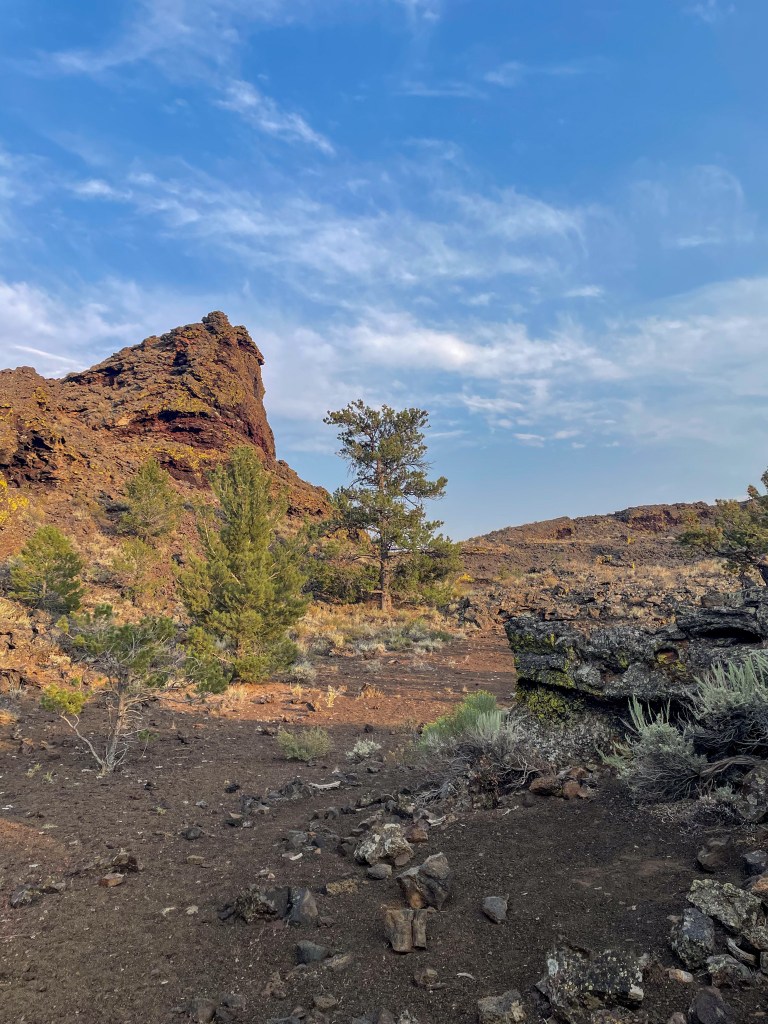
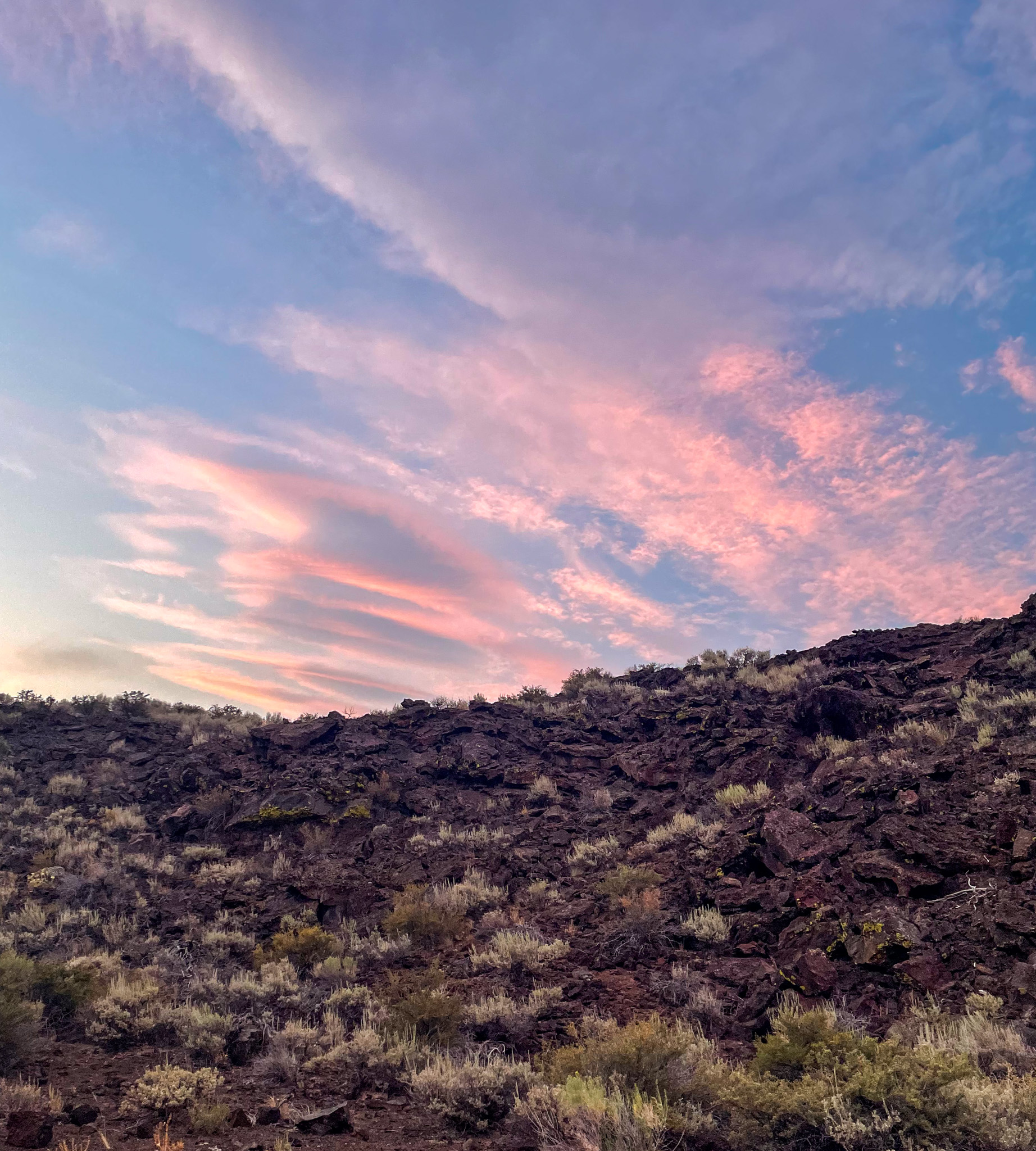
We descended into Echo Crater around 6:30 PM. We set up camp beside a large black-and-gray basalt rock. The lime green and orange lichens growing on the rock gave it a decorative color. I laid down my tarp, and we set up our sleeping pads and sleeping bags. We decided to cowboy camp under the stars. Without a tent, we could have an unobstructed view of the starry sky tonight, and the weather was perfect. Not a cloud in the sky. We ate dinner and watched the sun fall behind the horizon. The peak time for the Meteor shower was between 2:00 AM and 4:00 AM, but even at 10:30 PM we could see the occasional shooting star. Just after sunset, we watched some large unknown object burn bright behind a cloud and disintegrate into nothingness, unable to survive the entry into Earth’s atmosphere.
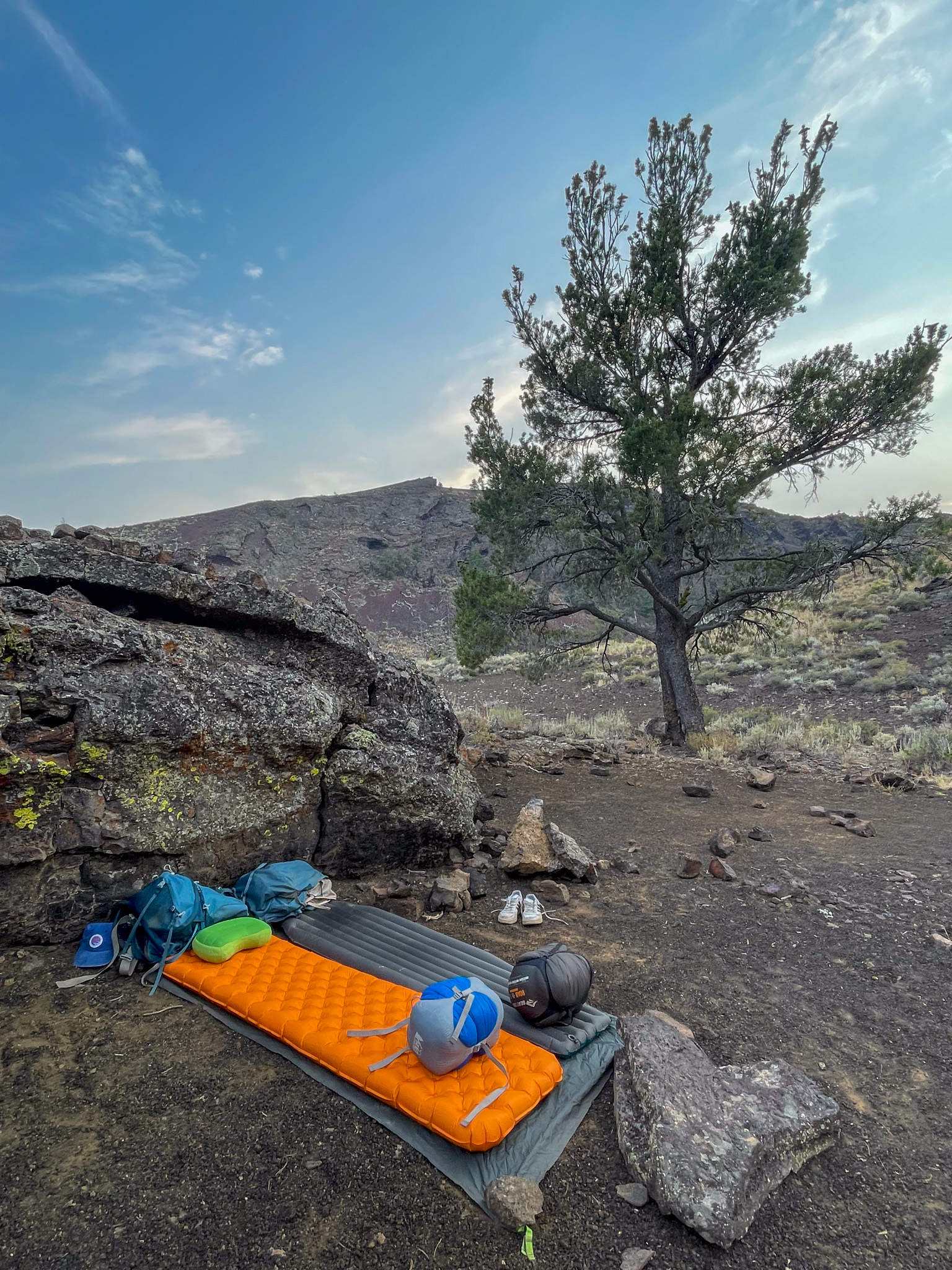
Unfortunately, not long into our night adventures, I punctured my brand new sleeping pad with one of the numerous small, black porous volcanic rocks. The porous nature of these rocks makes them sticky, and they seem to want to attach themselves to everything. My husband took one for the team and traded me since he can sleep anywhere, anytime, on anything.
We set our alarms for 2:00 AM and took a nap so we wouldn’t be up all night. I slept for maybe a few hours, a light, gentle breeze pleasantly tickling our legs. Other than the song of crickets and the occasional echolocative squeak of a bat, it was so quiet.
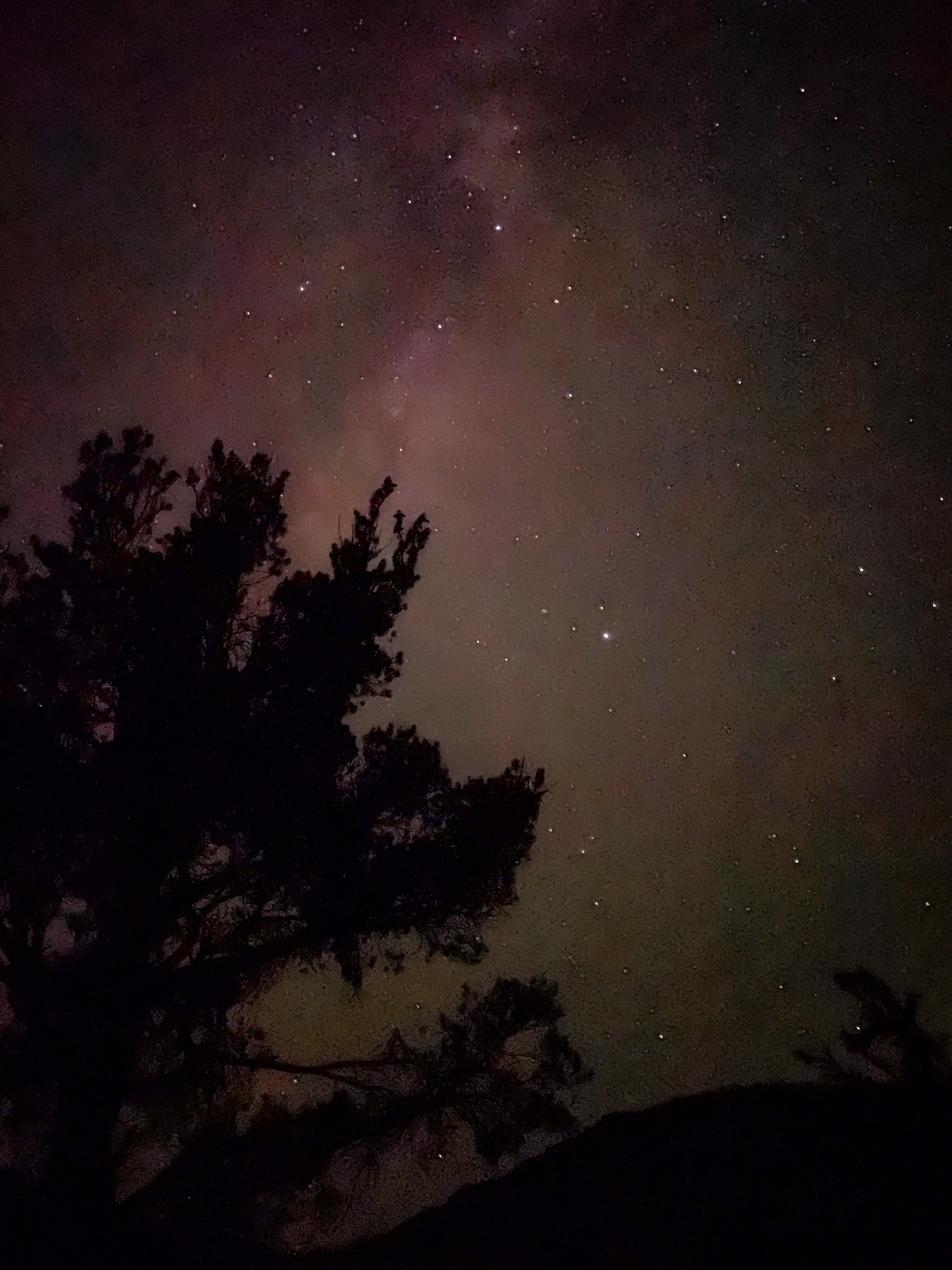
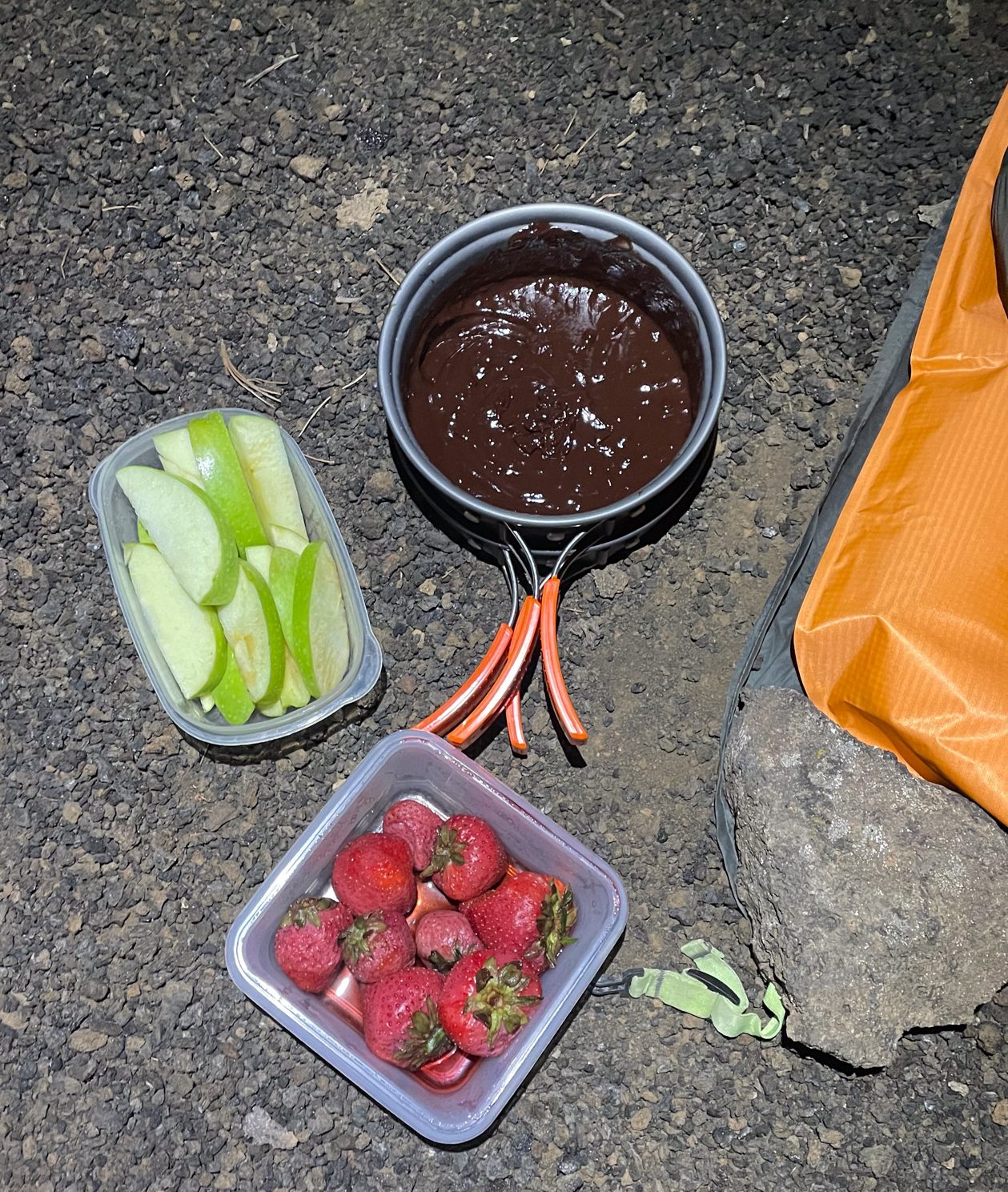
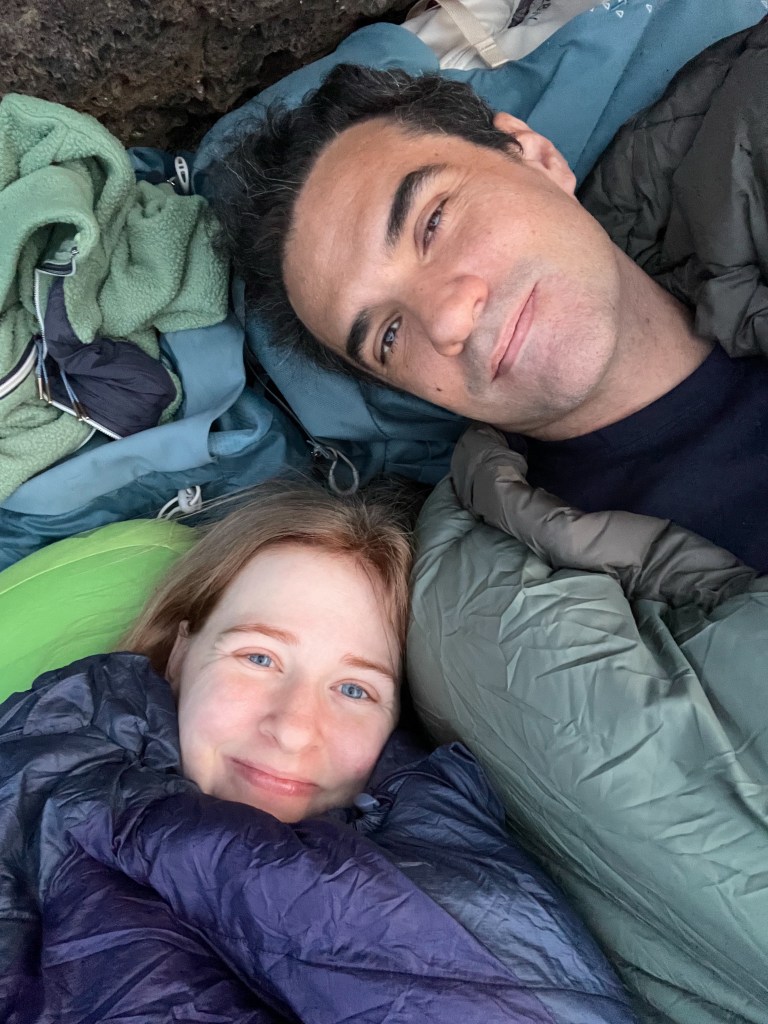
At 2:00 AM, I melted chocolate chips on my camp stove to make us chocolate fondue for our strawberries and apples as we watched the stars. The Milky Way was out and stark across the sky, and the Big Dipper sat just on top of the crater rim. We ate happily. It was a cool 52 degrees outside; we stayed snuggled in our sleeping bags to watch the show. Every time one flew across the sky, I felt like a child. Each time we saw one, one of us would exclaim, “Another one!” It was warm and cozy, snuggled beside my husband, watching the beauty of the sky as humans had done for generations before us. We watched until 4:00 AM, and as I closed my eyes with a bit of bittersweet sadness, I thought, “Goodbye, stars.”
We woke at 7:00 AM. The sun was up behind the cloudy skies. We packed up and headed the 3.5 miles back to our car. It was an unforgettable night under the stars.


Leave a Reply